Echinacea
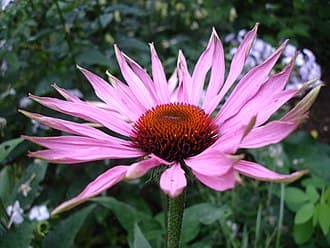
Echinacea purpurea
Echinacea is a genus of herbaceous flowering plants in the daisy family. It has ten species, which are commonly called coneflowers. They are native only in eastern and central North America, where they grow in wet to dry prairies and open wooded areas. They have large, showy heads of composite flowers, blooming in summer. The generic name is derived from the Greek word ἐχῖνος, meaning "hedgehog", due to the spiny central disk. These flowering plants and their parts have different uses. Some species are cultivated in gardens for their showy flowers. Two of the species, E. tennesseensis and E. laevigata, were formerly listed in the United States as endangered species; E. tennesseensis has been delisted due to recovery and E. laevigata is now listed as threatened.
🌱 Growing Guide
☀️ Sun Requirements
Full sun (6-8 hours)
💧 Watering
1-2 inches per week
🌍 Soil Type
Well-draining, rich in organic matter
📏 Spacing
12-36 inches apart
📥 Planting Depth
1/4 to 1 inch deep
🌱 Germination
5-14 days
💡 Care Tips
- 1Prepare soil with compost before planting
- 2Water at the base of the plant to avoid wet leaves
- 3Mulch around plants to retain moisture
- 4Monitor for pests regularly
- 5Harvest regularly to encourage more production
- 6Rotate crops yearly to prevent disease buildup
📅 Seasonal Calendar
| Season | Activity |
|---|---|
| Spring | Start seeds indoors or direct sow after last frost |
| Summer | Regular watering, mulching, pest monitoring |
| Fall | Harvest, clean up beds, prepare for winter |
| Winter | Plan next season, order seeds, maintain tools |
🔗 Related Plants
More herbs you might like